Shrimp and Grits Casserole

This Post May Contain Affiliate Links. Please Read My Disclosure
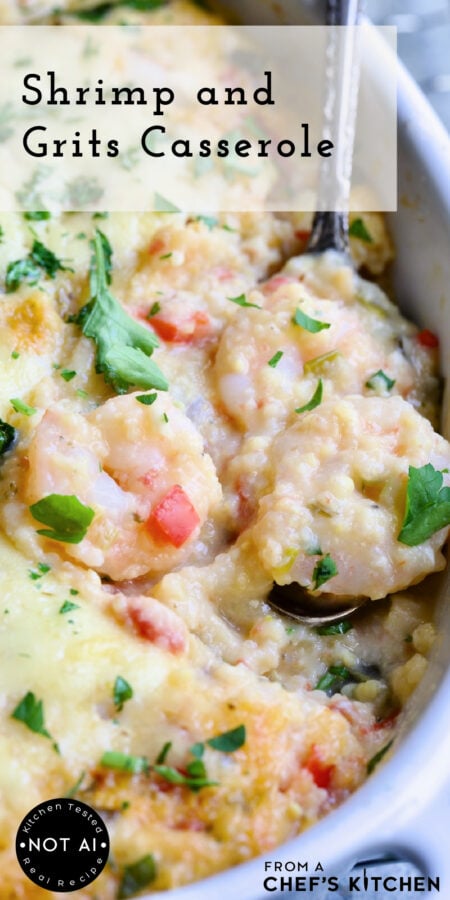
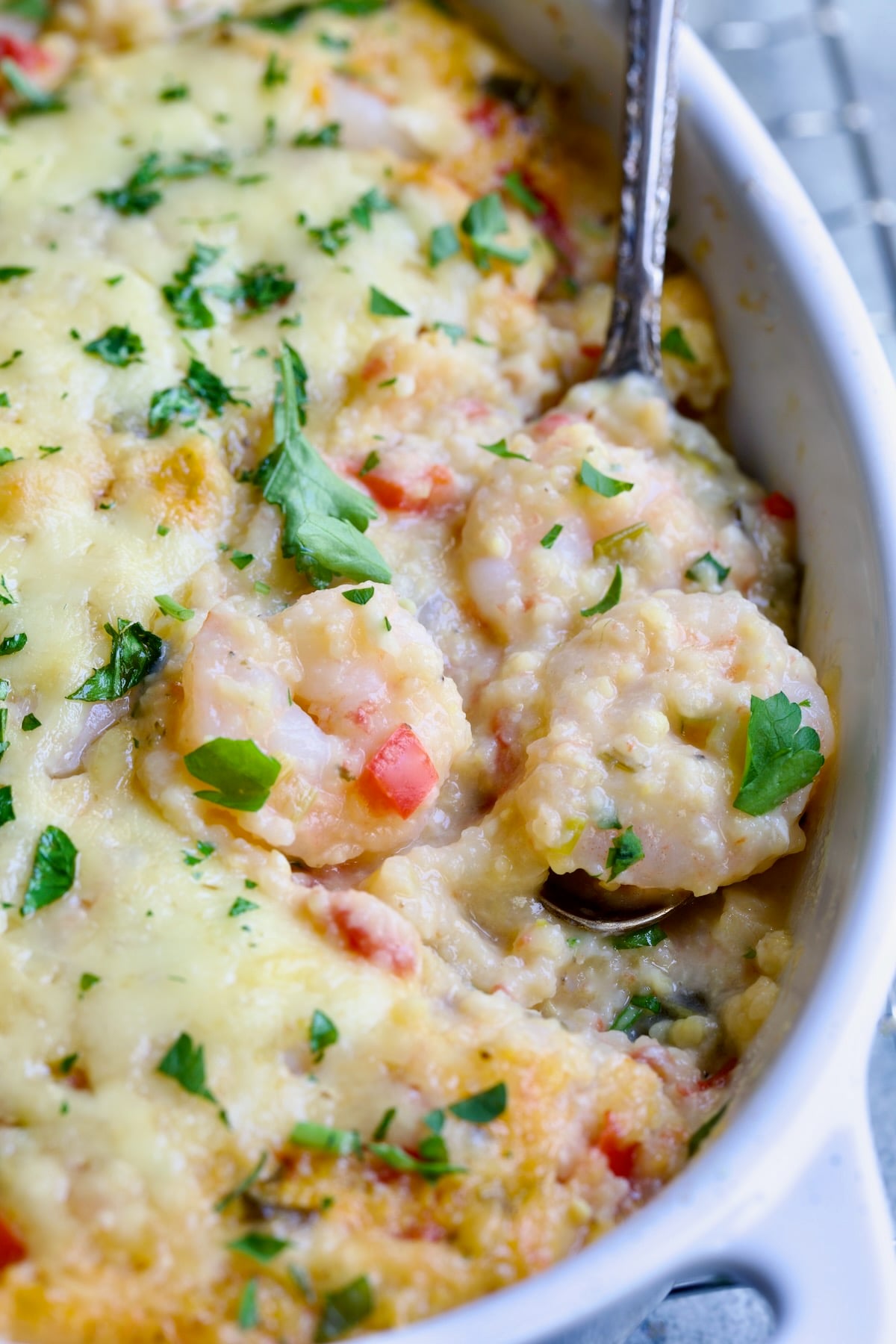
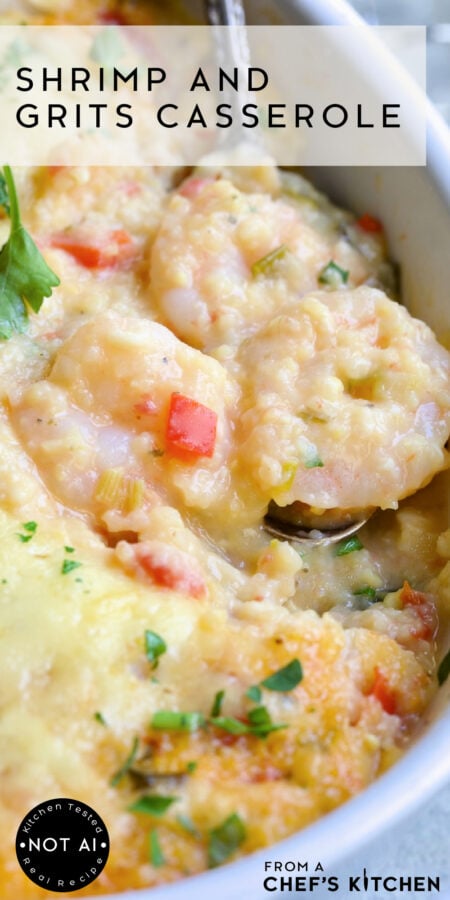
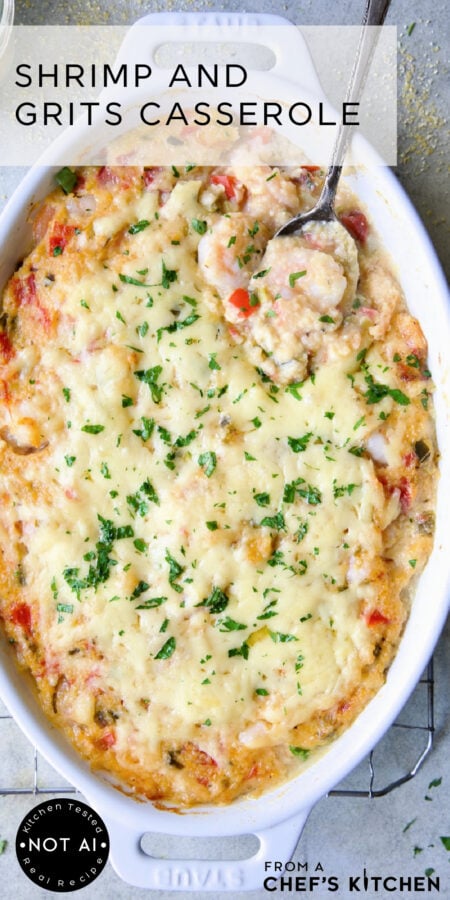
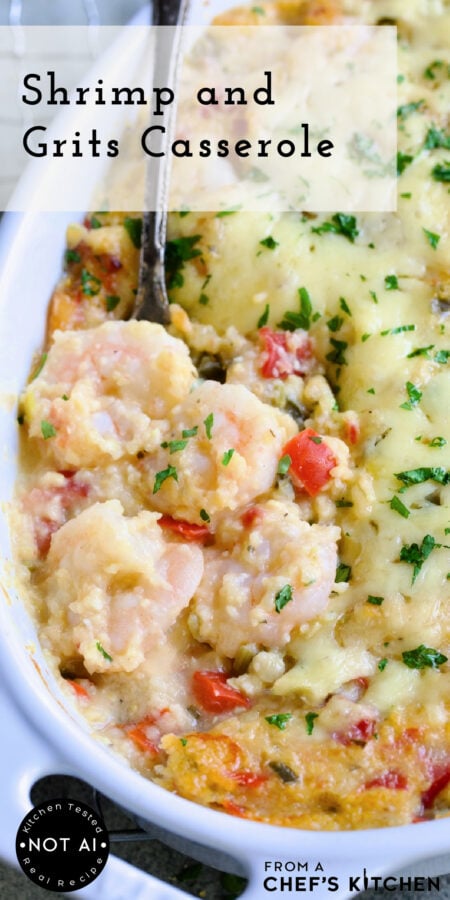
This spicy Shrimp and Grits Casserole is a tried-and-true twist on a Southern comfort food classic. Creamy grits, tender shrimp, melted Gouda, and a little heat come together in an easy, oven-baked dish that’s perfect for weeknights or casual entertaining. It’s the kind of crowd-pleasing dish that feels right at home on any table!
“Oh, my word! I made this–first time cooking grits. It is literally out of this world! Reheats well also. Will make again and again!”
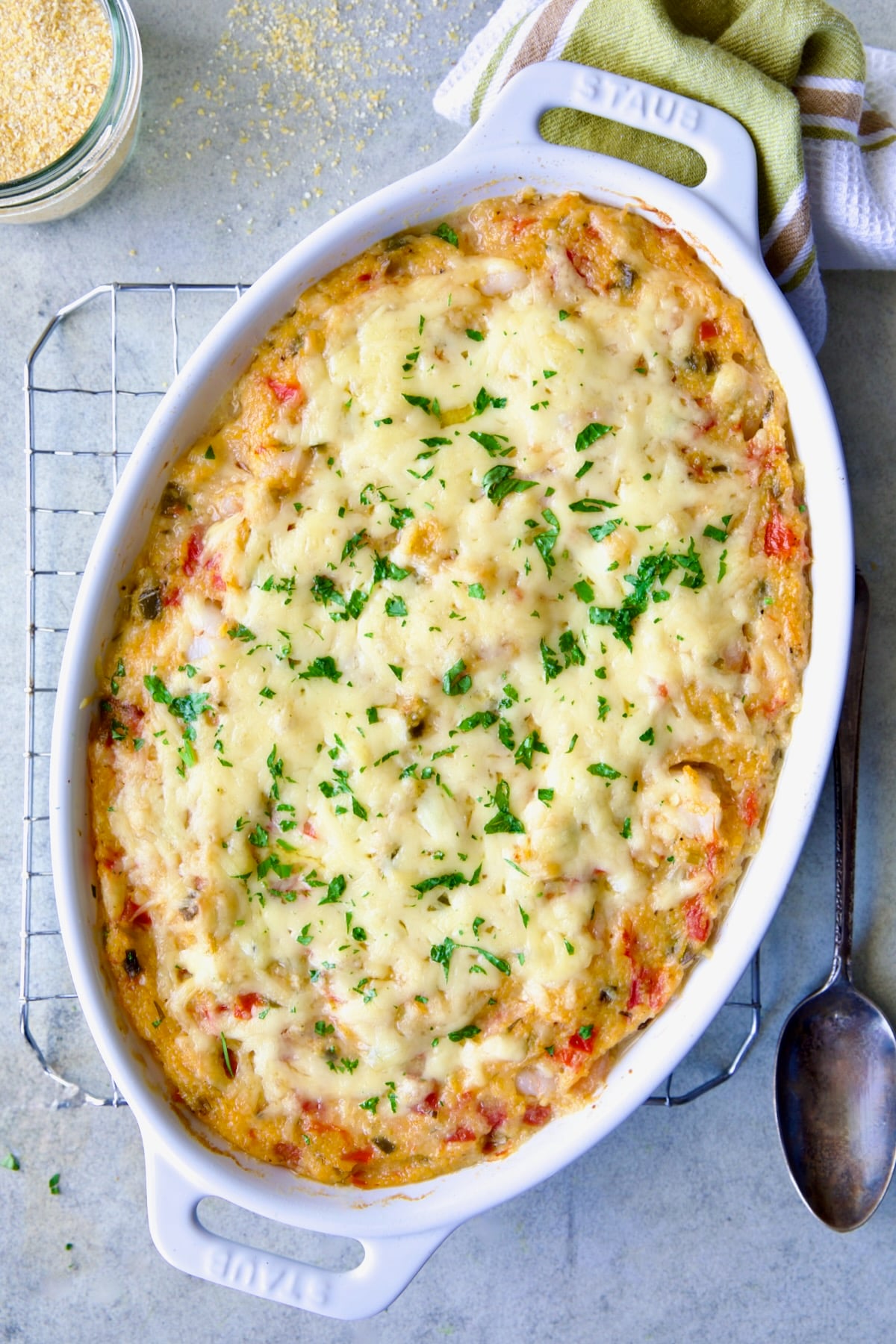
a brief intro to shrimp and grits:
Shrimp and grits is a classic dish in Southern coastal cuisine which features a creamy ground corn porridge that resembles polenta.
Although the true birthplace of shrimp and grits is thought to be Charleston, South Carolina, it has since gained widespread popularity. This dish was even declared the official state food of South Carolina in 1976.
Initially intended as a breakfast dish for fishermen, it has evolved to become a favorite option for lunch, brunch, and dinner across the Southern United States. Here’s that classic combination in casserole form.
Why This Recipe is a Keeper!
Whether you’re hosting a family dinner or looking for a new comfort dish to enjoy, this shrimp and grits casserole hits all the right notes!
Before moving to the South 30 years ago, I never had grits, nor shrimp and grits. Frankly, grits scared me because I thought them to be bland and boring.
I finally tried them some years back when my husband and I stayed at an elegant bed-and-breakfast in Mississippi while taking the long way home from New Orleans. Breakfast was plated and served to all the guests and there they were in front of me: Grits.
Not boring at all, but creamy and delicious cheese grits!
After that day and after enjoying shrimp and grits at numerous restaurants if they’re on the menu, I’m now somewhat of a fanatic.
This Shrimp and Grits Casserole recipe is:
- A Pinterest favorite!
- Tried and true! Over 450 4 and 5-star ratings!
- Restaurant-quality!
- Ideal for entertaining! It’s perfect for brunch, lunch, or supper and equally at home on a holiday table or weeknight.
- Endlessly adaptable! You can dial it up or down depending on your audience with smoked gouda or pepperjack cheese. Add andouille or ham for smokier depth. Crab, anyone?
- Make-ahead! Unlike traditional shrimp and grits, the casserole format allows you to prep components in advance and bake when needed, making it ideal for brunches, holidays, or entertaining.
Creamy, crowd-pleasing, and versatile, it’s the kind of dish that earns a permanent spot in your entertaining rotation!
How to Make shrimp and grits casserole:
Recipe Ingredients:
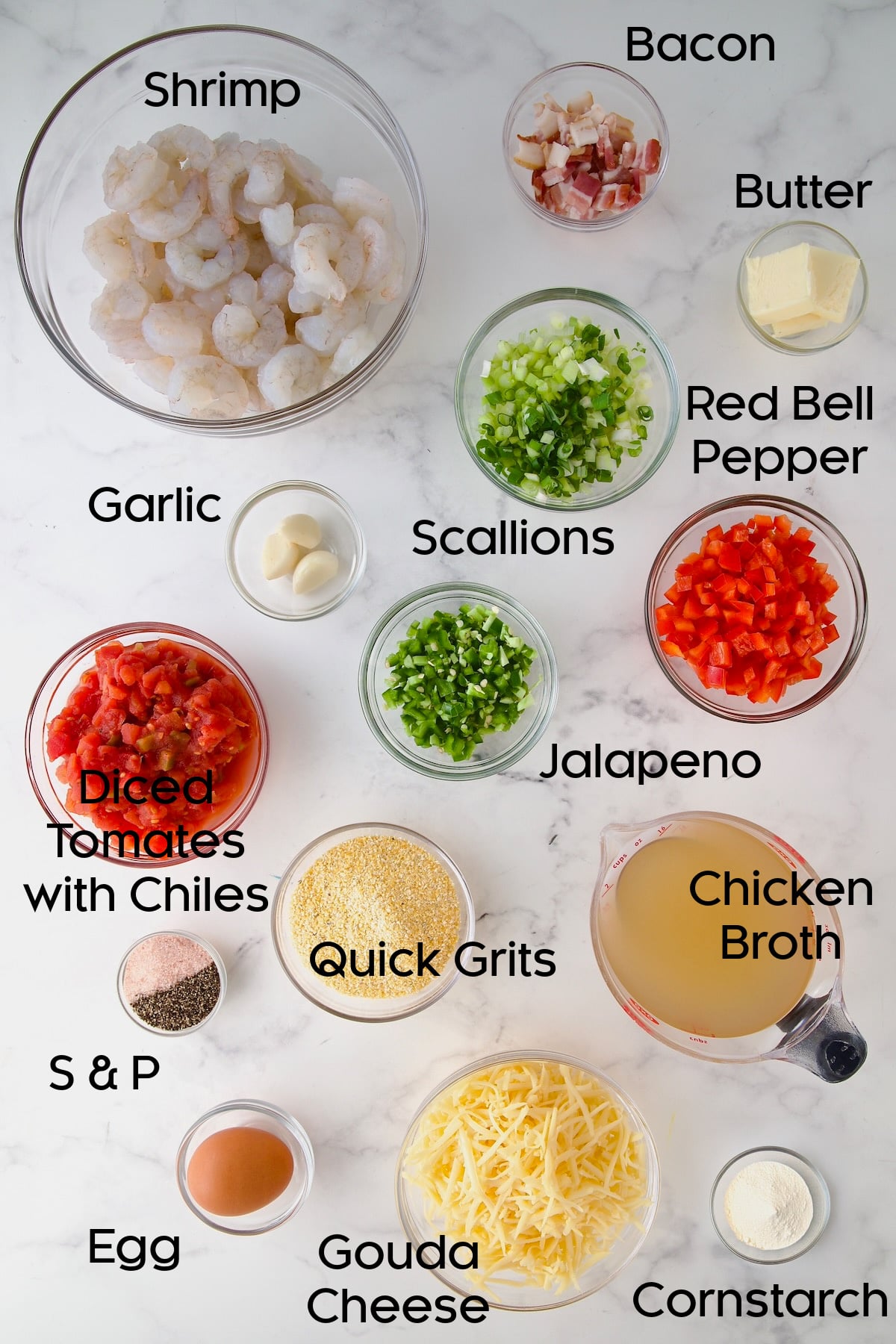
Here’s everything you’ll need to make this shrimp and grits casserole recipe. The exact quantities are on the recipe card below.
Ingredient Notes and Substitutions:
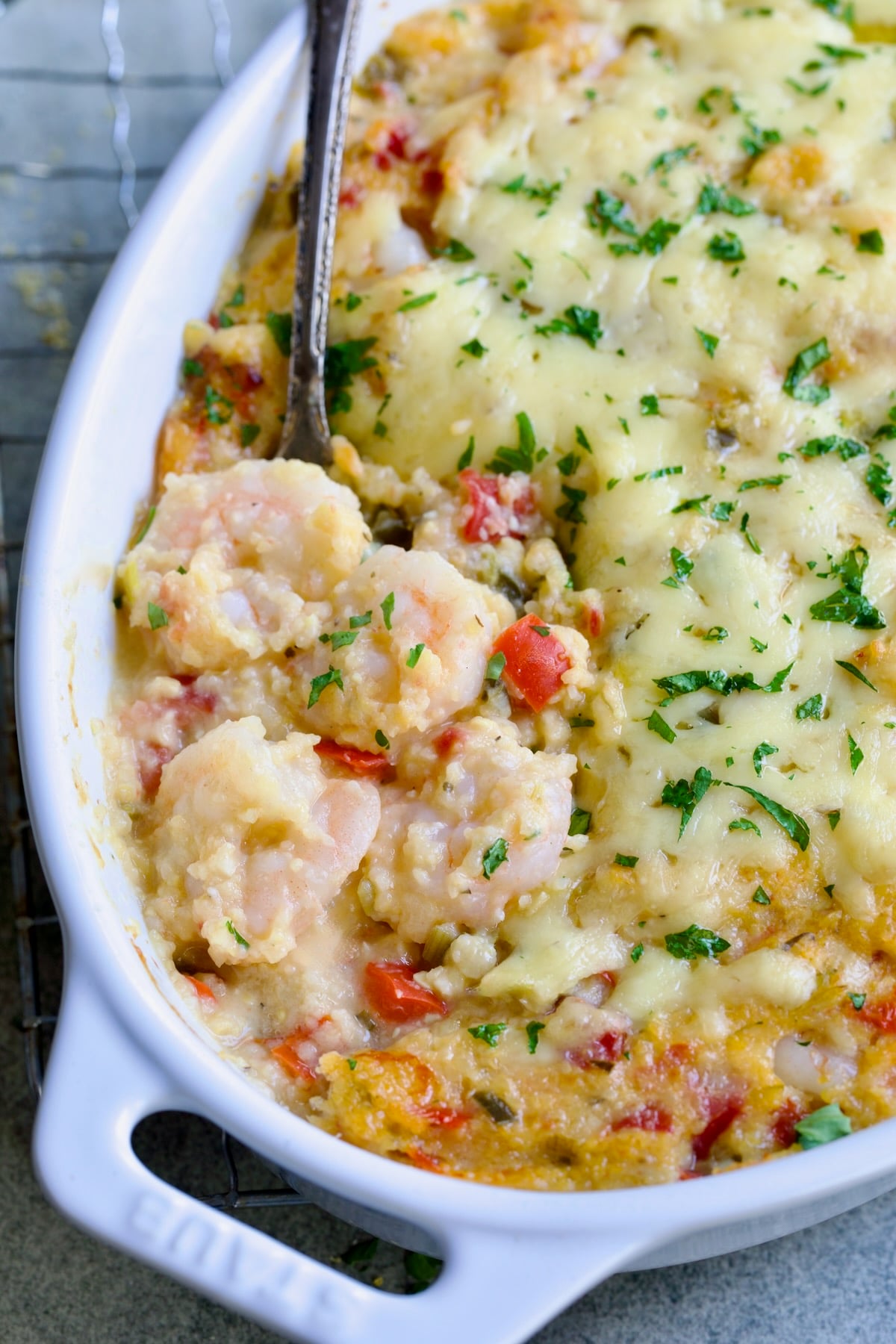
- Shrimp: It’s essential to always use wild-caught U. S. Gulf shrimp. They are much more resilient to reheating in a casserole, unlike farmed shrimp, which most certainly will become rubbery. I used 31-40 count, which is considered “medium-large.” You can use larger shrimp or smaller shrimp. However, I found the 31-40 count medium-large to be the right size–substantial, yet easy to manage on the plate.
- Bacon: If you don’t consume pork, use turkey or beef bacon. You can also use diced andouille sausage.
- Diced Tomatoes with Green Chiles: This shrimp and grits casserole recipe calls for a 10-ounce can such as Ro-Tel. You can substitute regular petite-diced tomatoes if you want to dial down the heat. Drain them well as the additional liquid could result in a soupy result.
- Jalapeno: Use as little or as much as you wish. Removing the seeds will cut the heat if you want a milder casserole.
- Quick Grits: Quick-cooking grits (not instant) work well in a casserole like this because of the other textures. Stone-ground grits will take much longer to cook, so cook them separately first, following the package directions, then add the vegetable combination and the remaining ingredients. I don’t recommend instant for this dish. They cook too fast and can turn mushy quickly.
- Chicken Broth: Can also use fish stock.
- Gouda Cheese: Gouda cheese melts beautifully and has a mild flavor, so it doesn’t compete with the shrimp. Smoked Gouda, Monterey Jack, or Pepperjack will also work well.
- Cornstarch: Helps to thicken and reinforce the casserole’s structure without changing the flavor. Also keeps it gluten-free.
Step-By-Step Instructions:
- Gather and prep all the ingredients.
- Preheat the oven to 375 degrees.
- Lightly grease a 1 1/2 – 2-quart baking dish with oil, butter or cooking spray. Set aside.
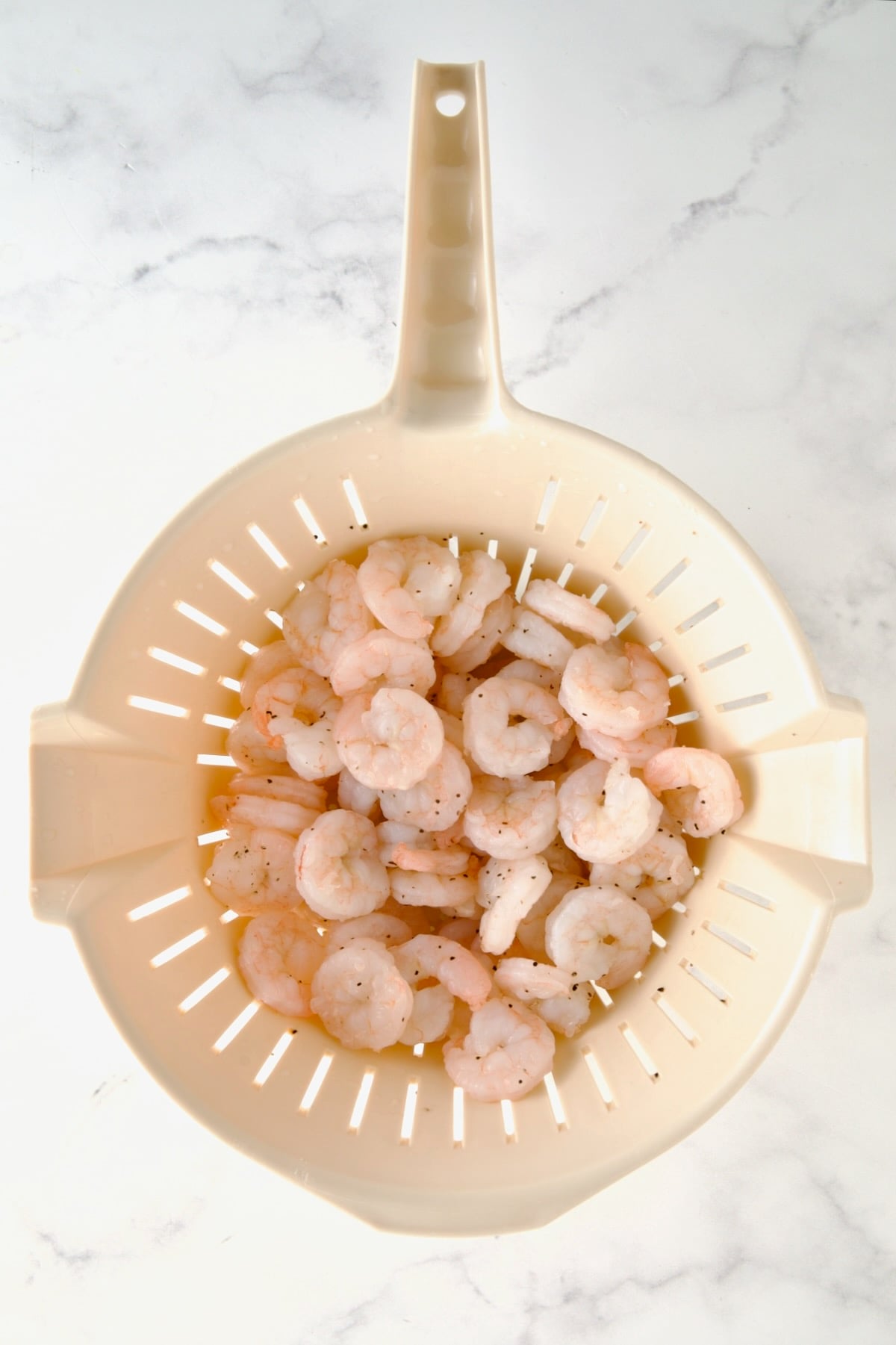
- Cook the shrimp: Place a colander in the sink to drain the shrimp. Then, bring a large, heavy saucepan of well-salted water (about 2 teaspoons) to a boil. Turn off the heat, add the shrimp, and cook for 10 to 15 seconds, or until they turn pink, stirring once or twice. Drain immediately into the colander and cool quickly under cold tap water. Alternatively, prepare an ice bath and cool the shrimp in that. Drain the shrimp and pat dry.
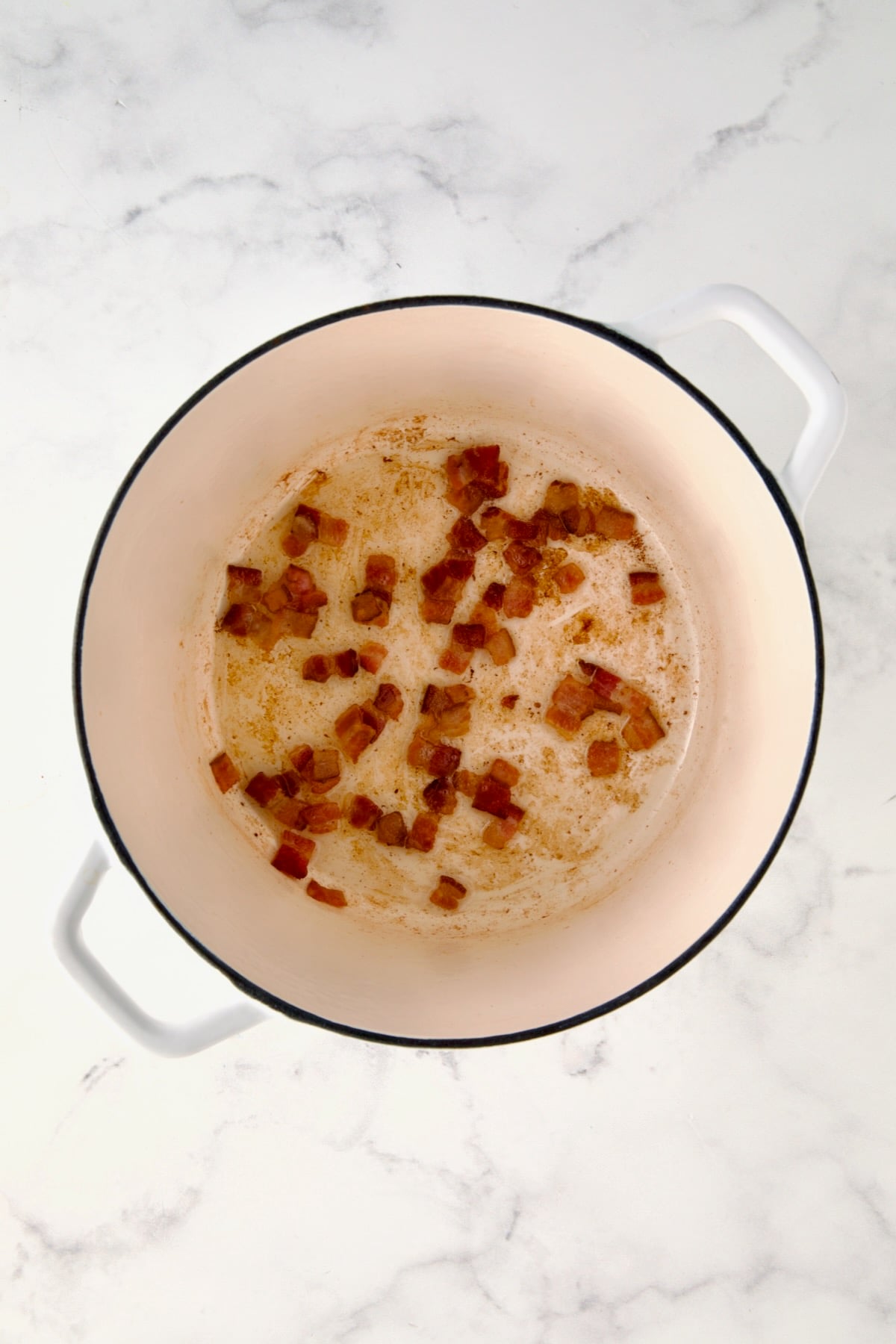
- In a heavy saucepan, cook the bacon over medium heat until browned and crispy. Transfer the bacon to a paper towel-lined plate with a slotted spoon, reserving the drippings in the saucepan.
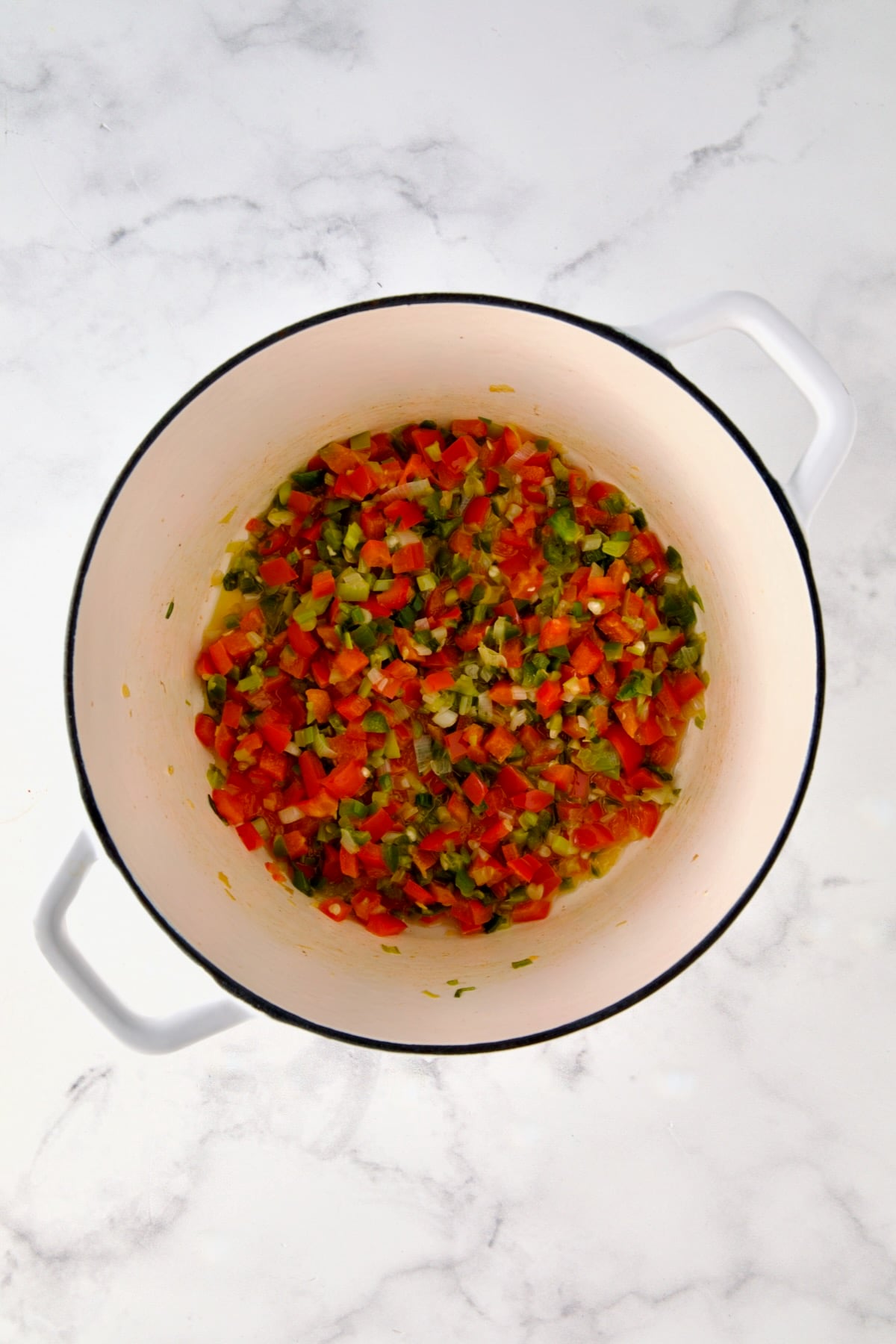
- Keep the heat on medium and add the butter to the bacon drippings. When melted, add the scallion, red bell pepper, and jalapeño pepper. Cook for 4 to 5 minutes or until softened.
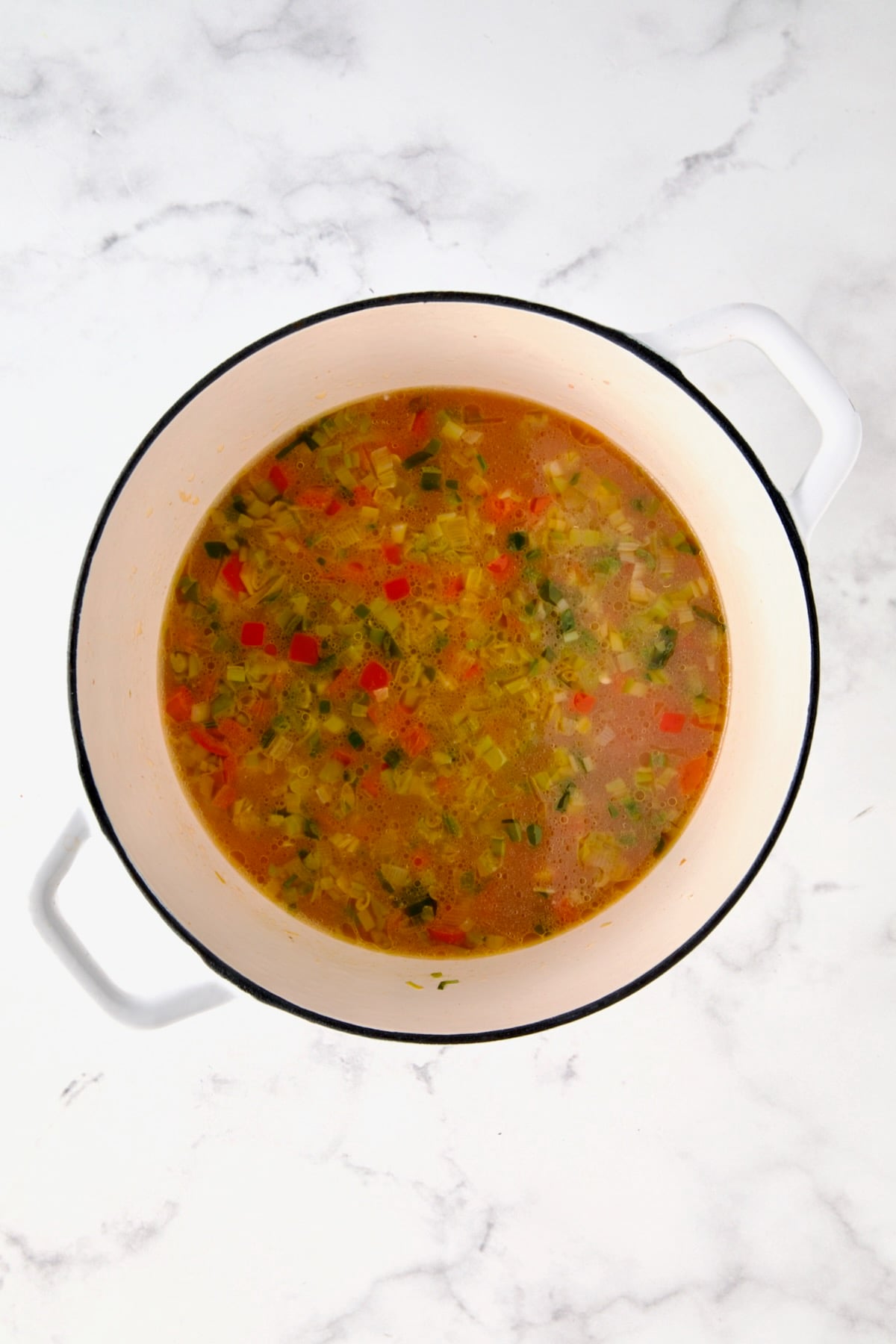
- Stir in garlic, diced tomatoes with chiles, and chicken broth (or fish stock). Bring to a boil.
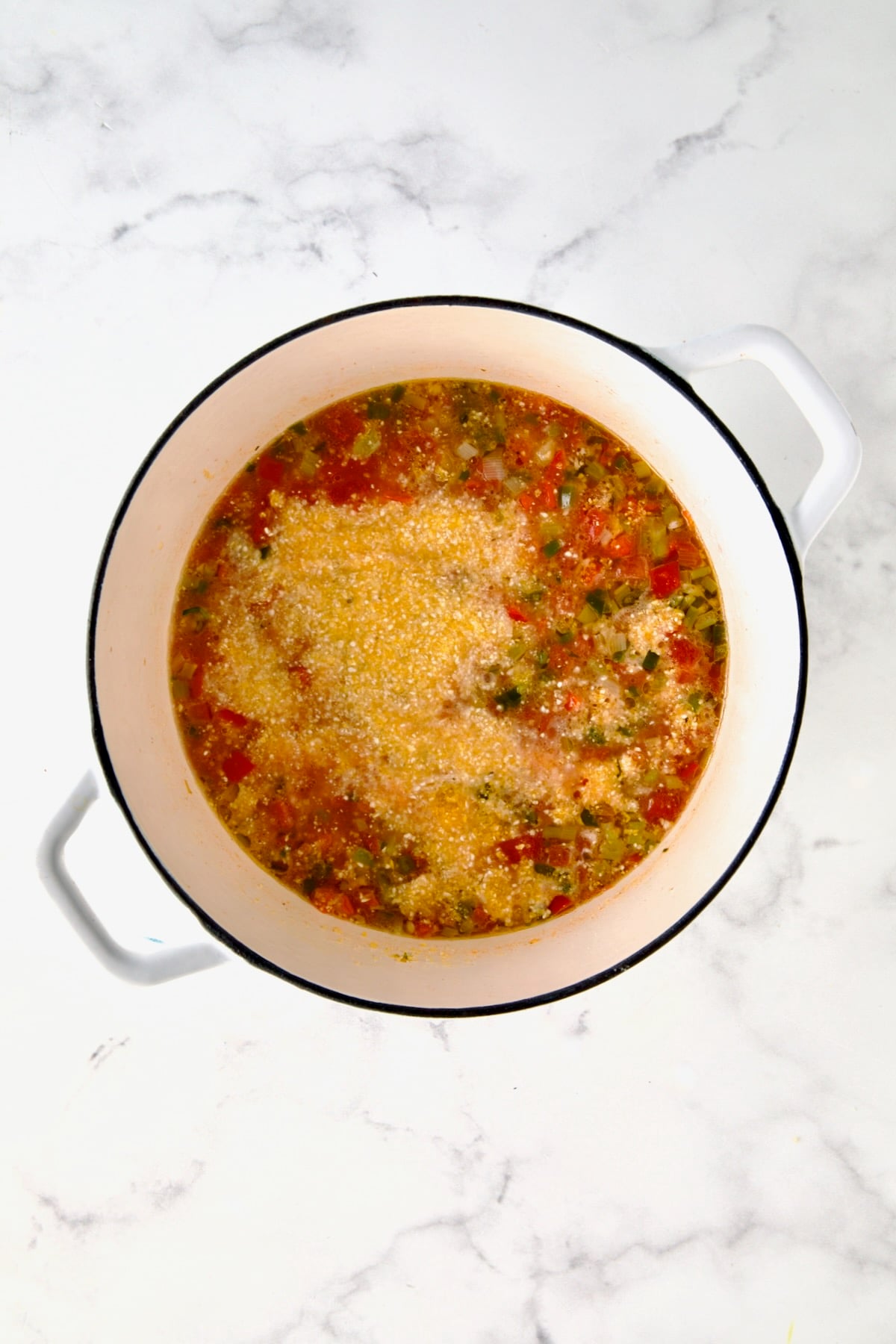
- Slowly stir in the grits. Return to a boil.
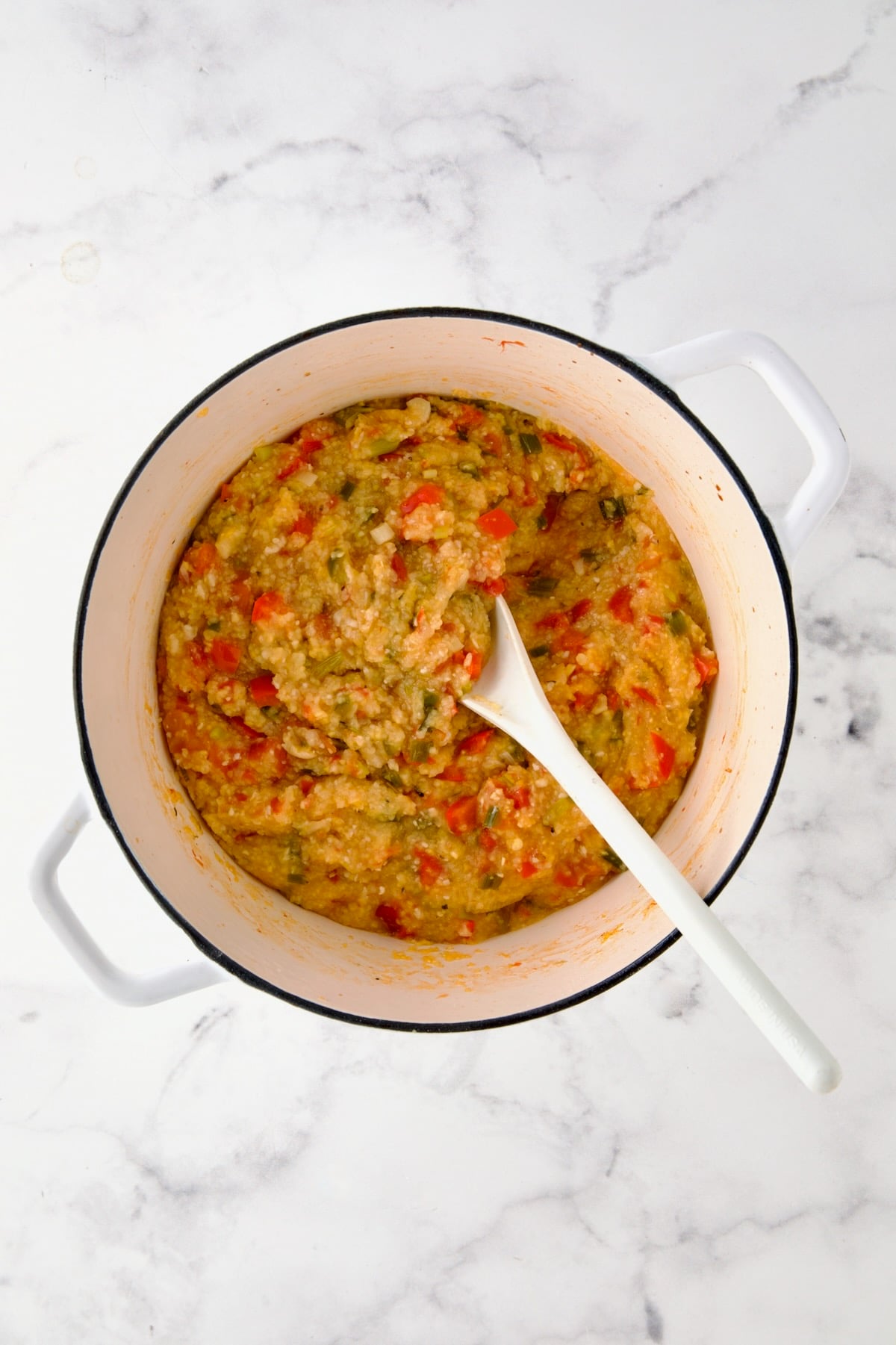
- Reduce the heat to low. Simmer, stirring occasionally, for 5 to 7 minutes or until thickened. Remove from heat and cool 15 minutes. Taste and season to taste with salt and black pepper.
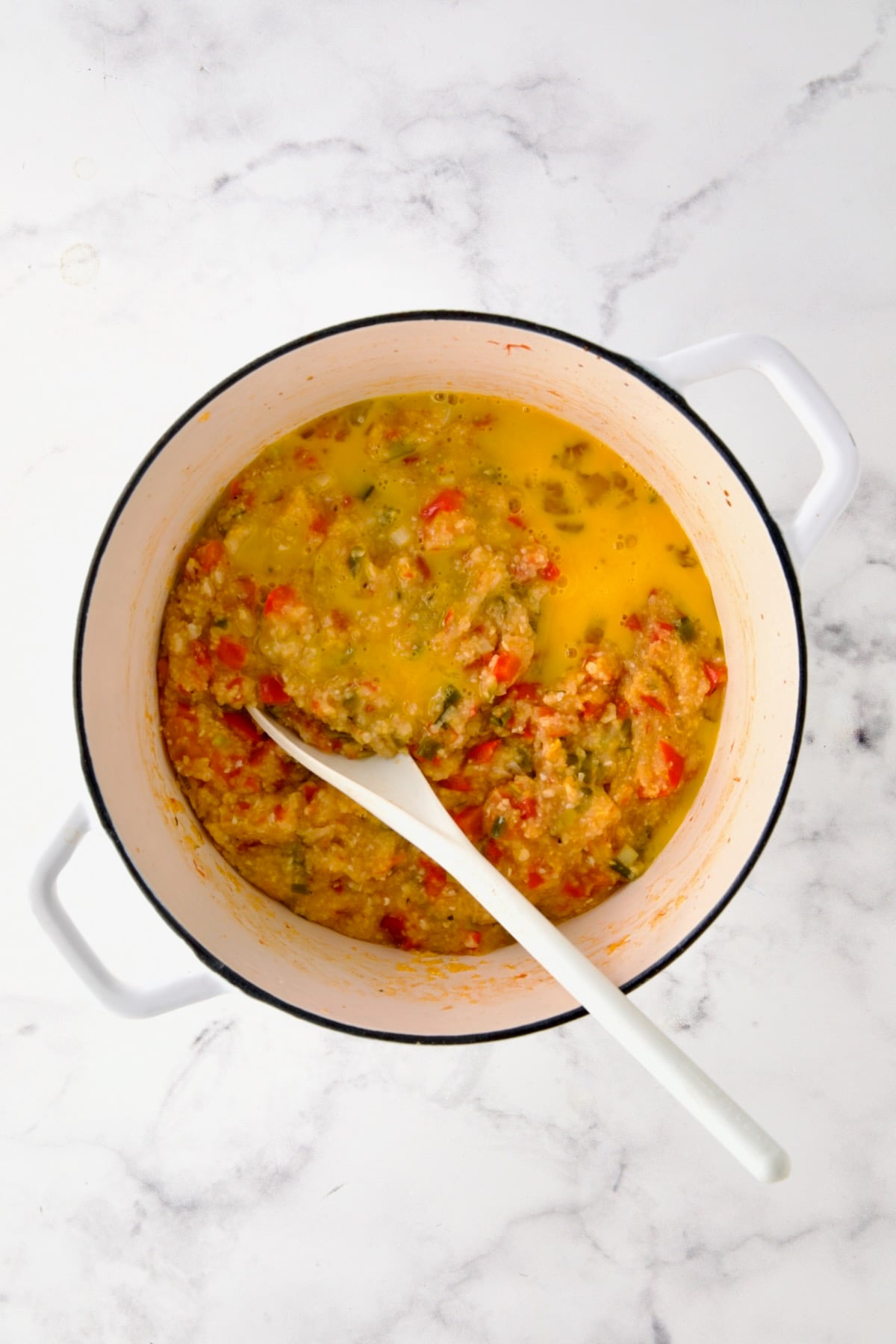
- Whisk the cornstarch into the egg, then stir it into the grits …
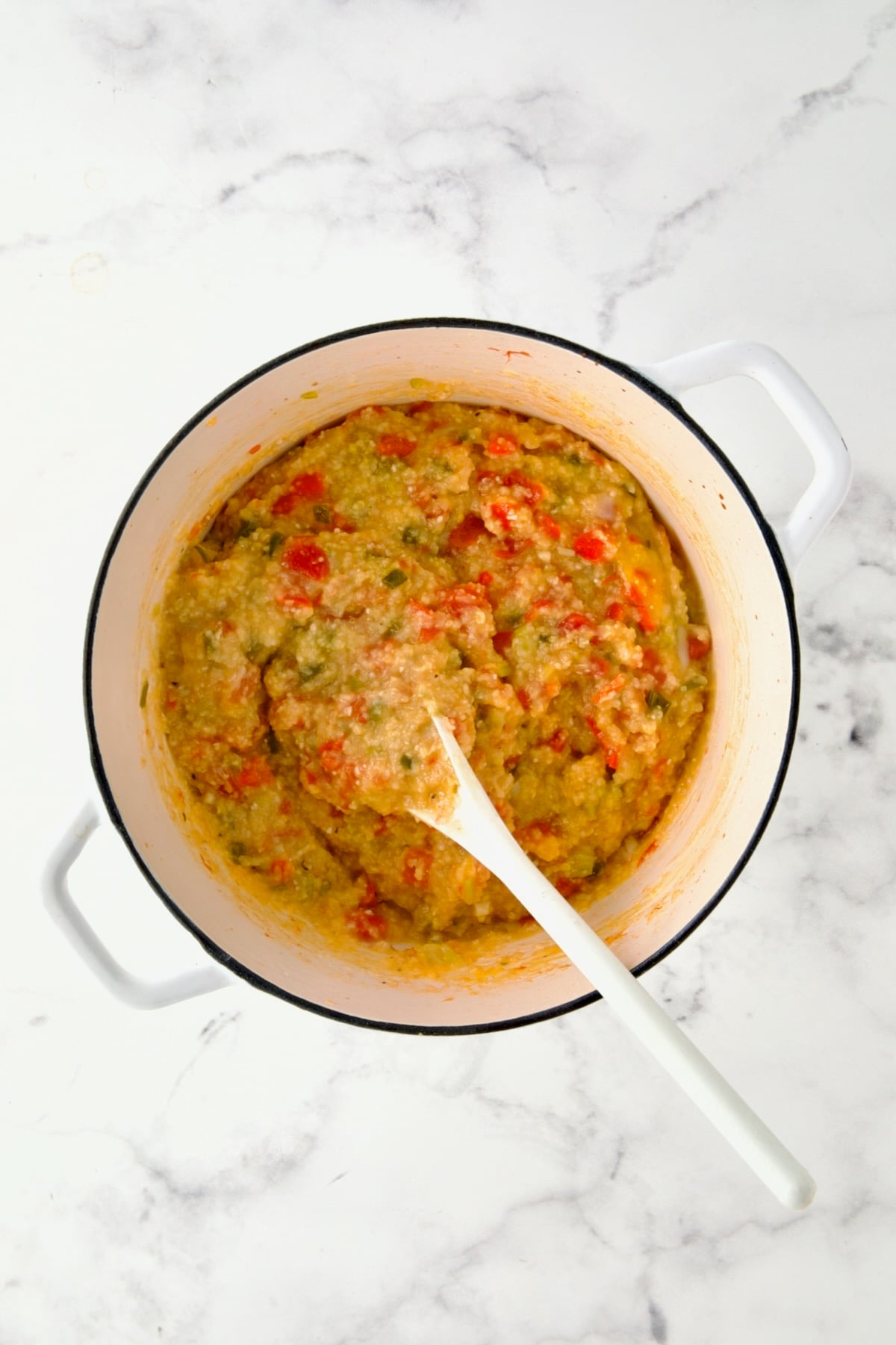
- … and fully incorporate.
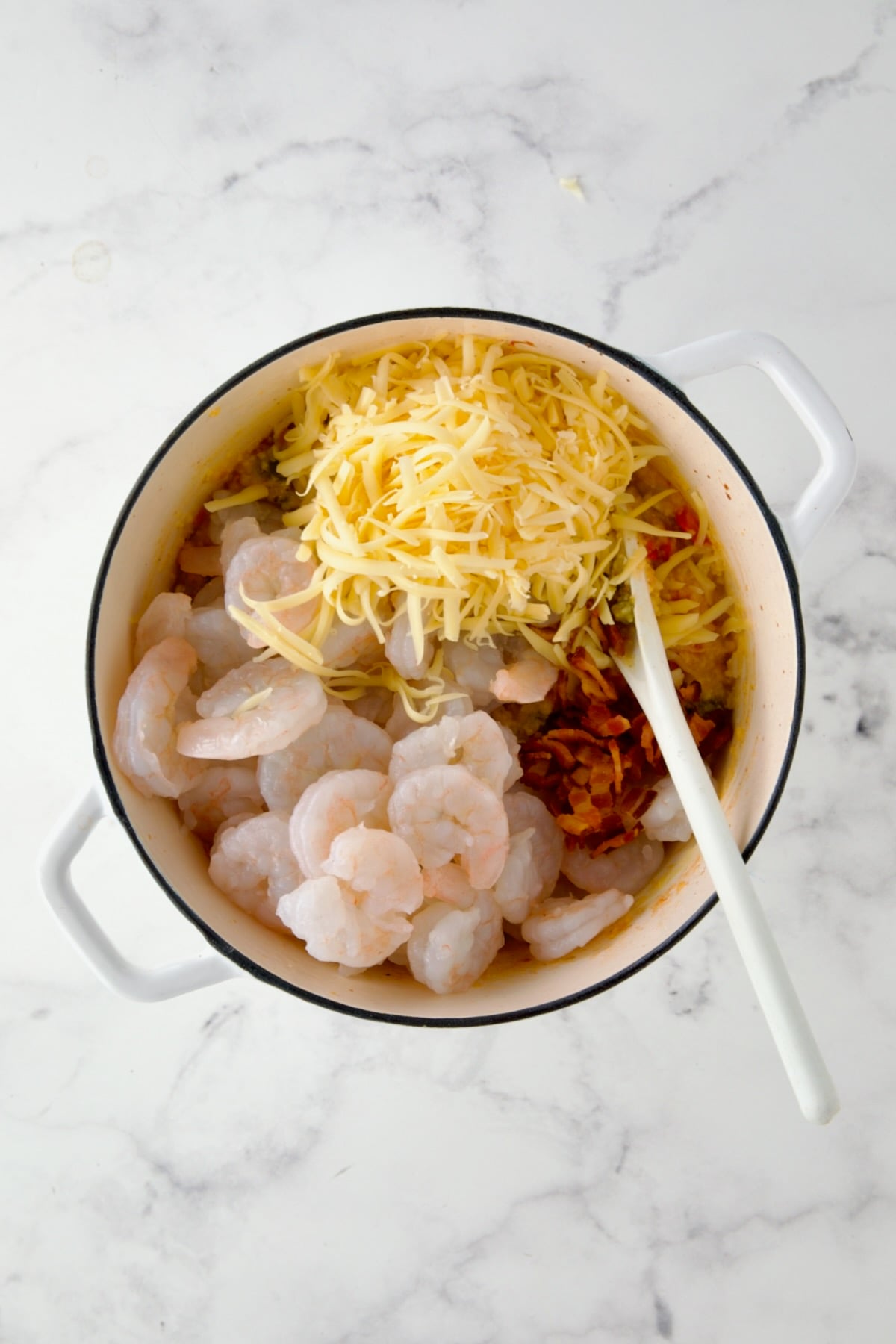
- Add the the shrimp, bacon, and 1 cup cheese …
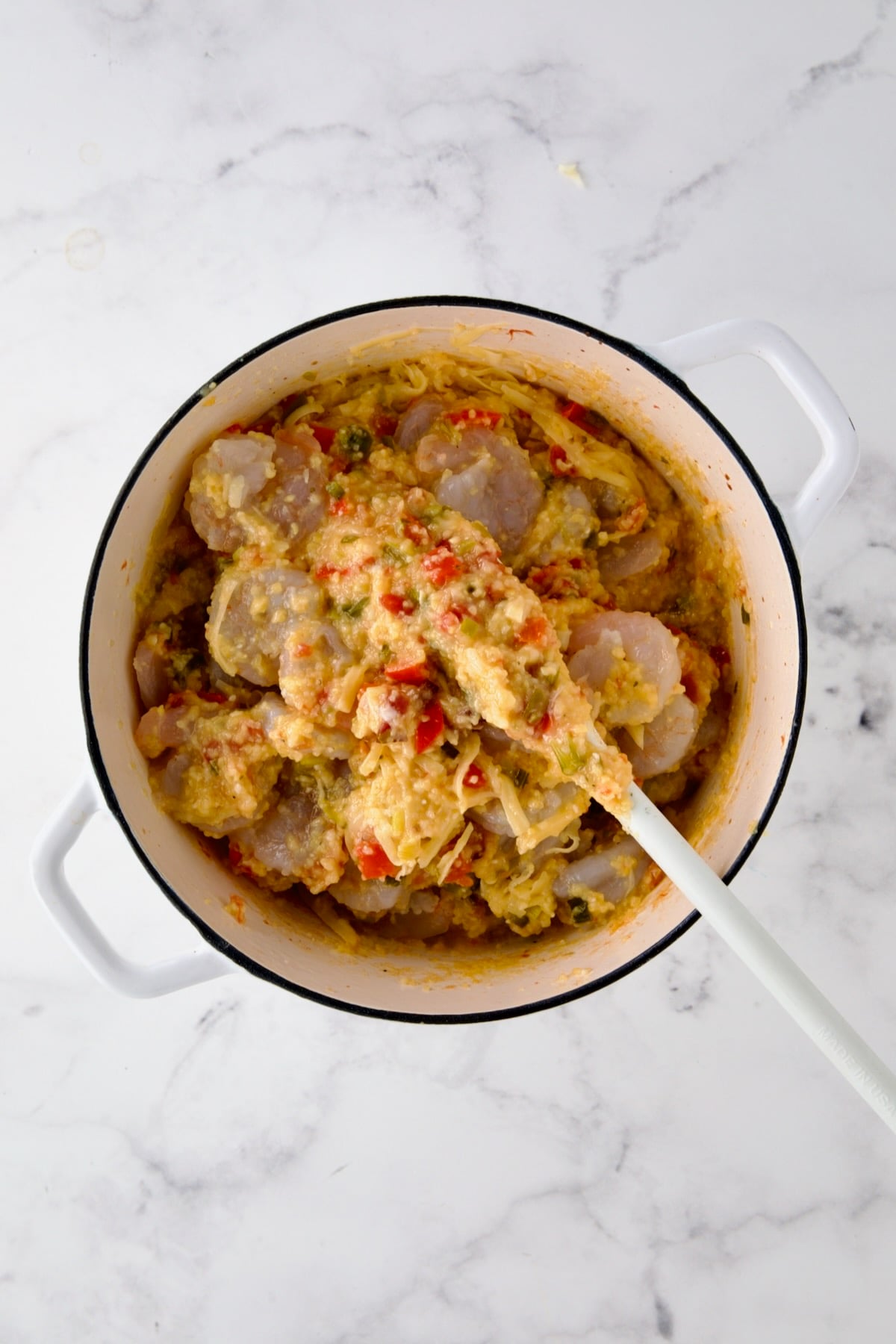
- … and fold it in.
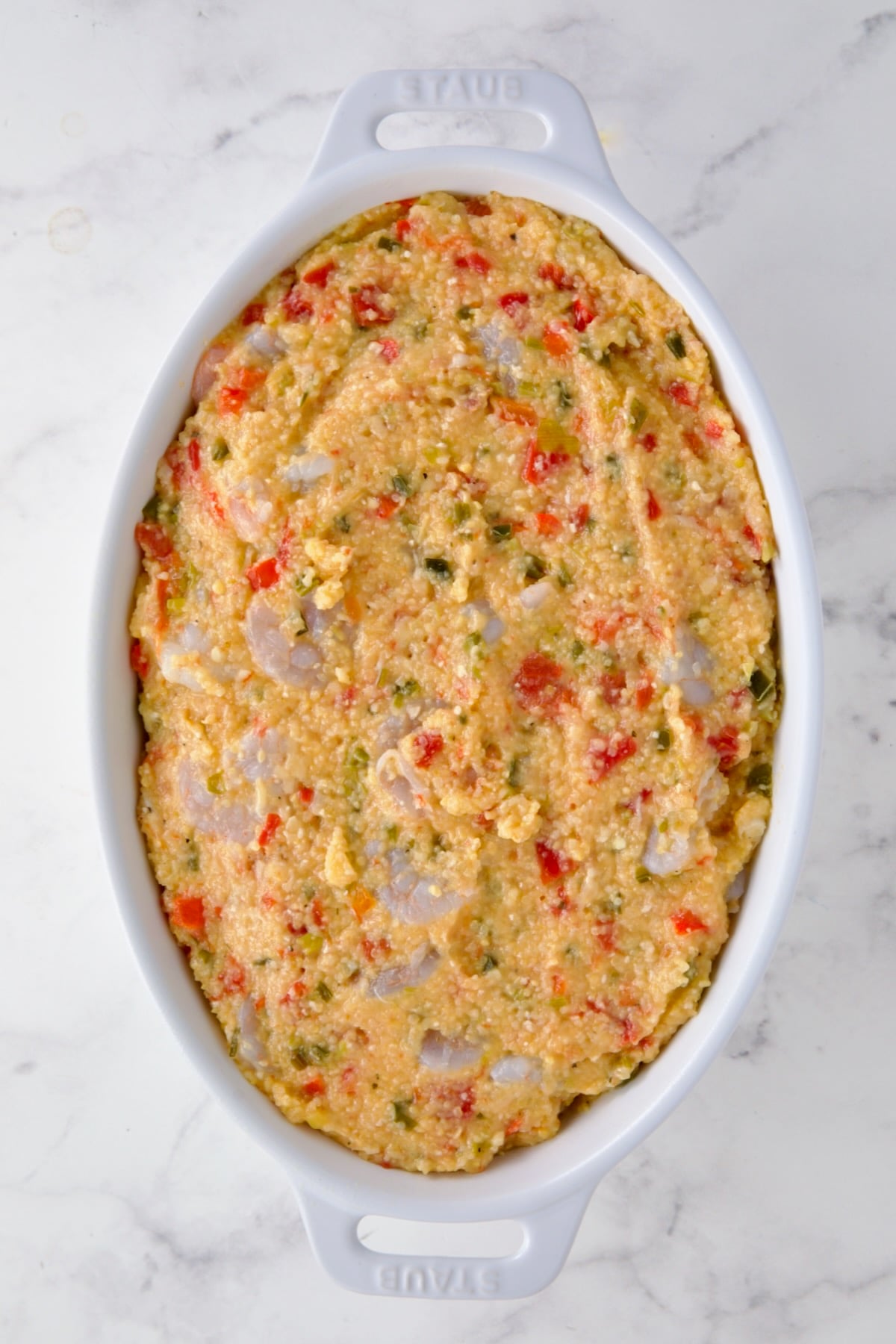
- Transfer to the prepared baking dish with more grits on the top than shrimp.
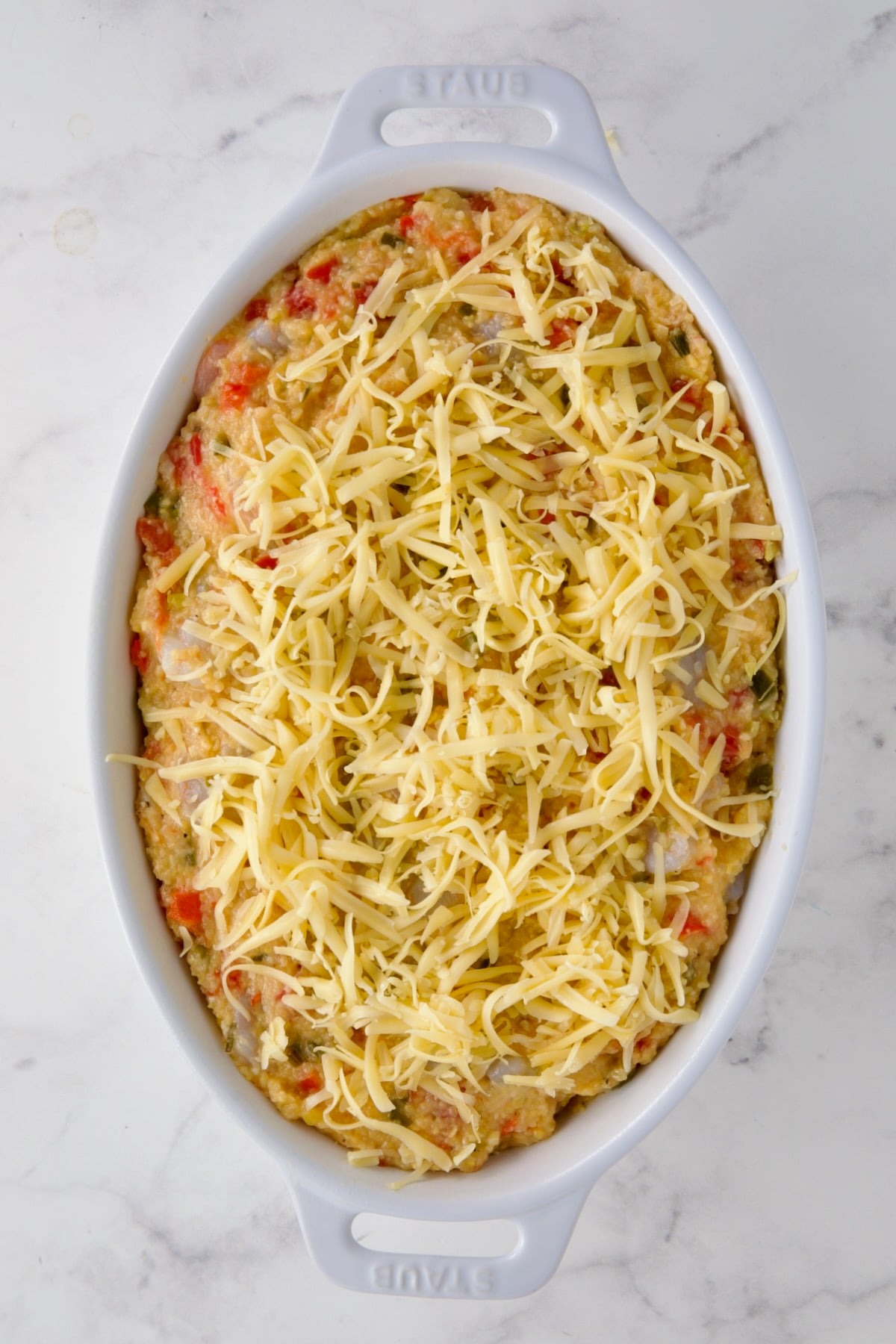
- Sprinkle with the remaining 1/2 cup cheese.
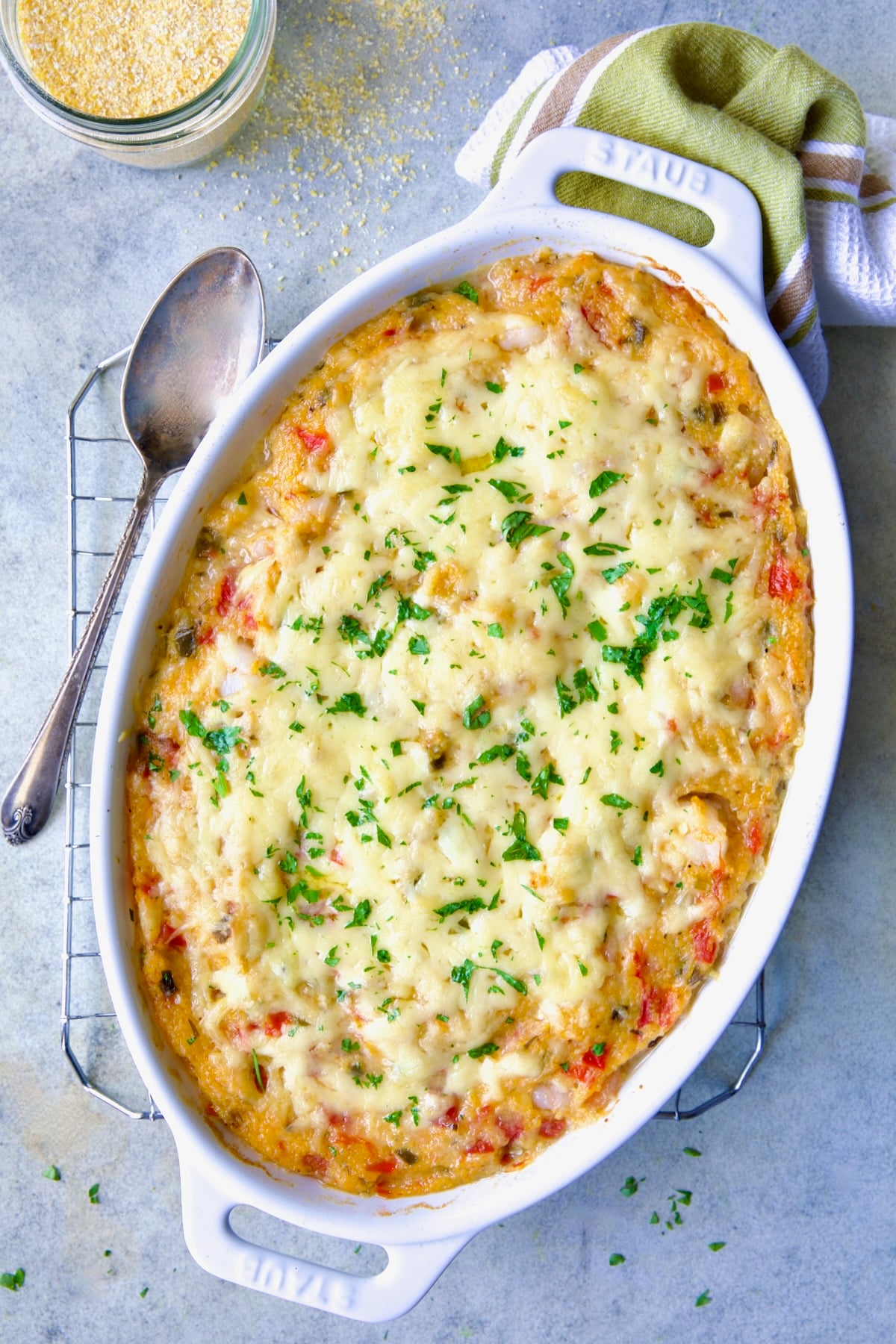
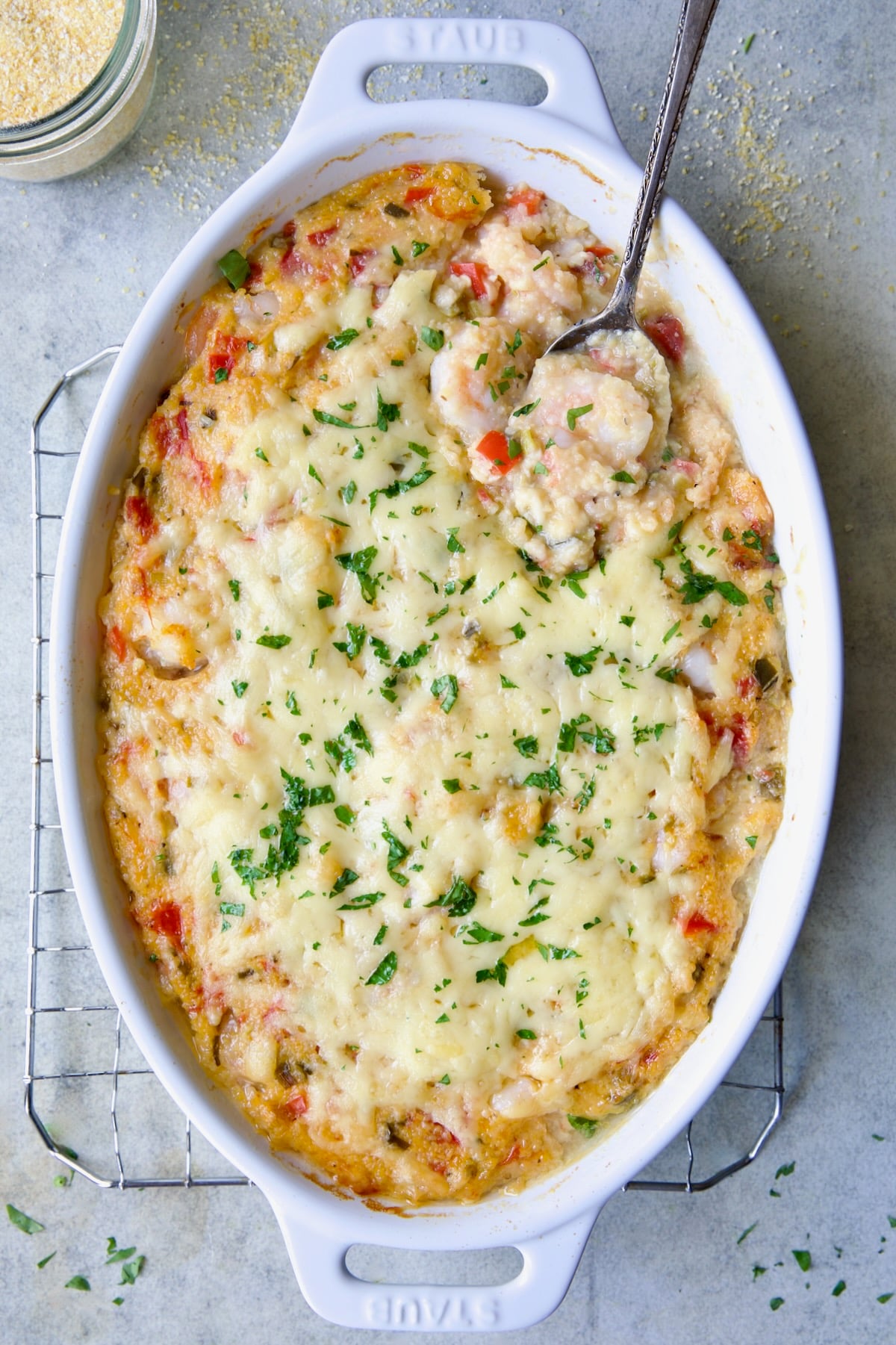
- Bake for 30 to 35 minutes or until heated through and bubbling. The casserole should be set around the perimeter with an internal temperature of at least 165 degrees. Let stand 5 to 10 minutes before serving
Chef Tips and Tricks:
- A shallow 1½ to 2-quart dish works best. Deep baking dishes take longer to set.
- Nearly all commercial shrimp sold is individually quick-frozen. The shrimp sold in the seafood display case has likely been thawed. If purchasing thawed shrimp, be sure to use it within a day or two and don’t refreeze it. I prefer to purchase frozen shrimp and thaw it myself.
- Be very careful not to overcook the shrimp. You don’t need to boil the shrimp; boil the water. Generously salt the water and get it to a rolling boil. Then, turn the heat off. Drop the shrimp into the water, stir it, and when the shrimp turns barely opaque (which happens quickly), remove it and cool it either under cold tap water or in an ice bath.
- The grits should be thick and spoon-standing before anything else is added. Undercooking the grits can result in a soupy casserole. (See Step #6 and how the grits hold their form.)
- Taste and season the grits with salt before adding the egg/cornstarch and remaining ingredients.
- The egg/cornstarch must be added in a separate step, rather than mixing it in with the bacon, shrimp, and cheese, so it distributes evenly throughout the grits. This ensures even distribution and proper binding. It’s also essential to let the grits cool for 15 minutes before adding the egg. If you add it too quickly, the egg could scramble. This also gives the grits additional time to thicken up before the egg (which is liquid) is added.
- Bake uncovered so excess moisture can evaporate. However, if the cheese browns too much, cover it loosely with aluminum foil.
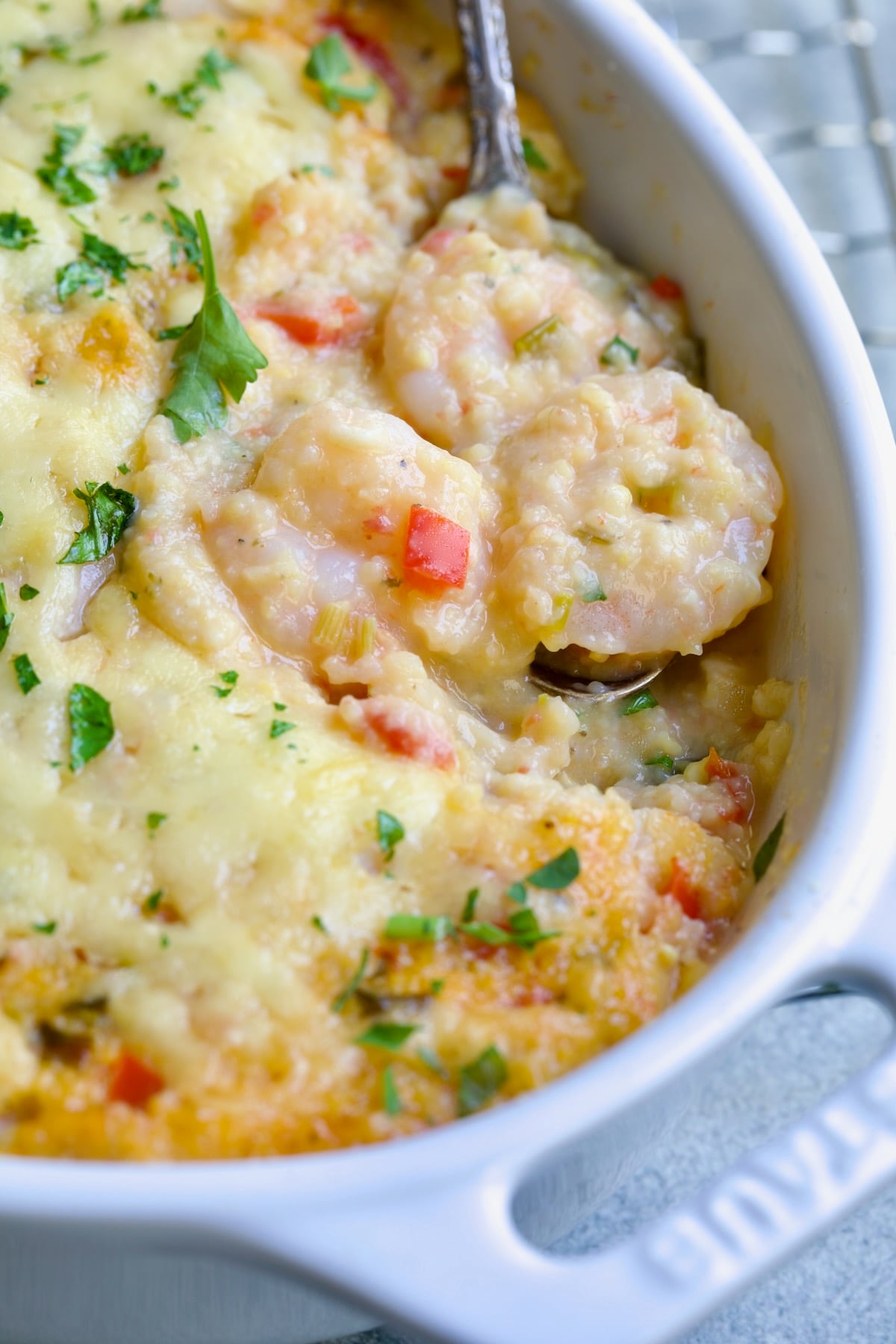
- Let the casserole rest for 5 to 10 minutes before serving so the grits firm up. The perimeter of the casserole should be set, with the interior remaining creamy.
Recipe FAQs:
Yes. However, stone-ground grits require a much longer cooking time, so prepare them separately according to the package directions before incorporating the vegetable mixture and remaining ingredients.
Yes, I highly recommend it. Uncooked shrimp can create additional liquid, resulting in a soupy casserole. There is also a food safety concern. As long as you use wild-caught shrimp, don’t boil the shrimp, overcook it, and cool it promptly; it will hold up well to being reheated in the casserole.
Yes, I recommend it. I tested a batch of grits without the egg, and they were dense after baking.
A shrimp and grits casserole can turn out soupy for several reasons:
>>The grits were not completely cooked, and the grits mixture was not thick enough.
>>There is too much liquid. Excess moisture from ingredients like shrimp, vegetables, or tomatoes can thin the mixture if they aren’t well-drained first. The typical ratio of quick grits to liquid is 1/4 cup of grits to 1 cup of liquid. This shrimp and grits casserole recipe uses 3/4 cup of grits to 2 cups of liquid, so the extra 1/4 cup of grits helps absorb any additional moisture released by the vegetables and shrimp.
>>The casserole was made ahead of time and covered before it completely cooled, allowing steam to drip back down onto the casserole.
>>The casserole was covered while baking.
>>The resting time was skipped. Letting the casserole sit for 10 to 15 minutes before serving allows the grits and eggs to finish firming up, often fixing what looks like a soupy texture straight out of the oven.
Yes, it can be assembled 24 hours in advance. Let it cool completely before covering it for refrigeration so condensation doesn’t drip onto the casserole, which can make it soupy. Let it sit at room temperature for 30 minutes before placing it in the oven.
Bake uncovered so moisture can evaporate. Cover loosely if the cheese is starting to look brown. Baking time may be longer if the casserole is super cold from the refrigerator.
Yes, cool uncovered, wrap securely, and freeze. Thaw in the refrigerator for at least 24 hours. Let the casserole sit at room temperature for 30 minutes or so before placing it in the oven.
Bake uncovered so moisture can evaporate. Cover loosely if the cheese is starting to look brown. Increase baking time if the casserole is super cold.
Serve with:
- Garlic Green Beans
- Easy Braised Southern Greens Recipe
- Grilled Corn Succotash
- Fried Cabbage with Bacon
More shrimp and grits recipes:
- Smothered Shrimp and Andouille Sausage with Creamy Parmesan Peppercorn Grits
- Cauliflower Grits with Gouda Cheese and Blackened Shrimp
- Pumpkin, Chipotle and White Cheddar Grits with Bacon-Wrapped Shrimp
Get all my fish and seafood recipes at Fish and Seafood Recipes – From A Chef’s Kitchen.
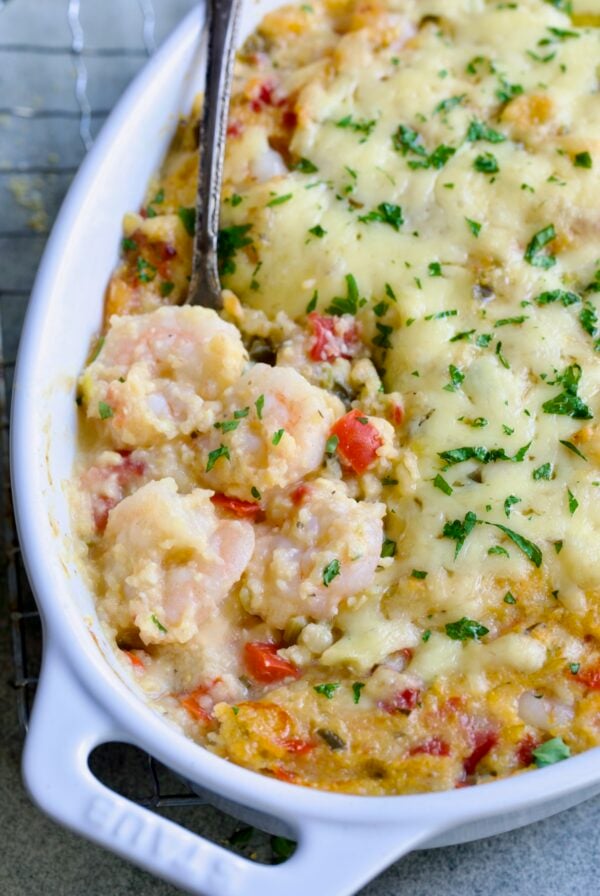
Shrimp and Grits Casserole
Video
Ingredients
- Cooking spray, butter or oil, for the baking dish
- 1 pound medium-large uncooked shrimp (31-40 count), peeled, deveined and tail removed
- Salt and freshly ground black pepper
- 2 slices bacon, chopped
- 3 tablespoons butter
- 1 bunch scallions (medium-width), white and light-green part only, chopped (scant 1 cup)
- 1 small red bell pepper, chopped (scant 1 cup)
- 1 medium jalapeño pepper, seeded if desired, finely chopped
- 3 cloves garlic, minced
- 1 can (10-ounce) diced tomatoes with green chiles, drained
- 2 cups chicken broth, or fish stock
- 3/4 cup quick-cooking grits, not instant
- 1 large egg, beaten
- 1 tablespoon cornstarch
- 1 1/2 cups shredded Gouda cheese, divided
- Chopped fresh parsley, for garnish (optional)
Instructions
- Preheat oven to 375 degrees. Lightly grease a 1 1/2 – 2-quart baking dish. Set aside.
- Cook the shrimp: Place a colander in the sink to drain the shrimp. Then, bring a large, heavy saucepan of well-salted water (about 2 teaspoons) to a boil. Turn off the heat, add the shrimp, and cook for 10-15 seconds, or until they turn pink, stirring once or twice. Drain immediately into the colander and cool quickly under cold tap water. Alternatively, prepare an ice bath and cool the shrimp in that. Drain the shrimp and pat dry.
- In a heavy saucepan, cook the bacon over medium heat until browned and crispy. Transfer the bacon to a paper towel-lined plate with a slotted spoon, reserving the drippings in the saucepan.
- Keep the heat on medium and add the butter to the bacon drippings. When melted, add the scallion, red bell pepper, and jalapeño pepper. Cook for 4-5 minutes or until softened.
- Stir in garlic, diced tomatoes with chiles, and chicken broth (or fish stock). Bring to a boil.
- Slowly stir in the grits. Return to a boil.
- Reduce the heat to low. Simmer, stirring occasionally, for 5-7 minutes or until thickened. Remove from heat and cool 15 minutes.
- Taste and season to taste with salt and black pepper.
- Whisk the cornstarch into the egg, then stir it into the grits and fully incorporate.
- Fold in the shrimp, bacon, and 1 cup cheese. Transfer to the prepared baking dish with more grits on the top than shrimp. Sprinkle with the remaining 1/2 cup cheese.
- Bake for 30-35 minutes or until heated through and bubbling. The casserole should be set around the perimeter with an internal temperature of at least 165 degrees. Let stand 5-10 minutes before serving
Notes
- It’s essential to always use wild-caught U. S. Gulf shrimp. They are much more resilient to reheating in a casserole, unlike farmed shrimp, which WILL become rubbery.
- If using stone-ground grits, cook them separately following the package directions. Then, add the vegetable combination and the remaining ingredients.
- Quick-cooking grits (not instant) work because of the other textures.
- I don’t recommend instant grits for this dish. They cook too fast and can turn mushy quickly.
- If you don’t consume pork, use turkey or beef bacon. You can also use diced andouille sausage.
- You can substitute regular, drained, petite diced tomatoes if you want to dial down the heat.
- Can use fish stock in place of chicken broth.
- Smoked Gouda, Monterey Jack, or Pepperjack will also work well.
- Can be assembled 24 hours in advance. Let cool completely before covering for refrigeration so condensation doesn’t drip onto the casserole, which can make it soupy.
- Let it sit at room temperature for 30 minutes before placing it in the oven.
- Bake uncovered so moisture can evaporate. Cover loosely if the cheese is starting to look brown.
- Baking time may be longer if the casserole is super cold from the refrigerator.
- Cool, wrap securely, and freeze.
- Thaw at least 24 hours in the refrigerator.
- Let the casserole sit at room temperature for 30 minutes or so before placing it in the oven.
- Bake uncovered so moisture can evaporate. Cover loosely if the cheese is starting to look brown.
- Increase baking time if the casserole is super cold.
Nutrition
Nutritional values are automatically calculated using unbranded products and are estimates only. Actual results may vary based on ingredients used and portion sizes. Adjust as needed for dietary restrictions, allergies, or health concerns.
 Like this? Leave a comment below!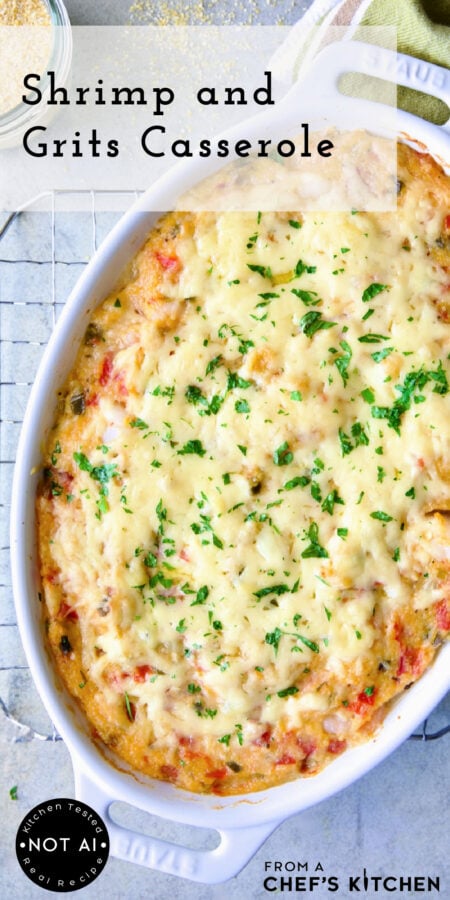


















Can this be frozen? Baked then frozen or just mixed together then frozen?
Hi, Lora, Thanks for your question. I would get it all prepared to the point of baking, then cool it down thoroughly. Let it sit in the refrigerator for a few hours before placing in the freezer. You want it good and cold so that you don’t get condensation in the container as that’s one thing that causes freezer burn. Wrap it thoroughly and freeze up to 2 months. It’s going to need at least 24 hours to thaw in your refrigerator before baking. Thanks, hope you enjoy and please stay in touch!
Hi Carol,
Since the shrimp is pre-cooked, and then frozen, and then reheated again for serving.. what’s to prevent the shrimp from becoming overcooked, tough or chewy? That’s a big turn off for me food wise but I was looking for a new recipe to add to my collection of frozen ones to have on the ready before baby comes!
Thanks!
Hi, Julia, Thanks for your great question! Use wild-caught American shrimp. There is a HUGE difference between the farmed stuff and shrimp from the Gulf. Farmed shrimp will turn rubbery, tough and chewy in a heartbeat. Wild-caught shrimp has a fighting chance. Just be sure to not overcook it in the first place. Cook it until it just turns pink then cool it quickly because it will continue to cook if left to steam. I’ve heard from readers who have frozen this casserole and they’ve been happy with the result. Thanks again and congratulations on the new baby soon to arrive!
I made this tonight. Spicy, cheesy and wonderful! It was a hit!
Thank you, Eva! So glad you enjoyed and please stay in touch!
I just made this dish and it tastes amazing! I love shrimp and grits and thus recipe really does it justice! I added Andouille sausage to mine….perfecto!
Oh, Erica, you made my day! Love, love, love the thought of andouille sausage in this dish. So glad you enjoyed and please stay in touch!!
I’m in the process of making this as we speak! Do I cook the grits before hand?
Thanks!!
Yes, they need to be cooked first. See the third paragraph of the instructions. Thanks!
Hi, as Brit, I often see grits in recipes, but have no idea what it is. Is it like cous cous?
Your recipe sounds wondeful, but not sure I could get the raw shrimp (prawns to us).
Hi, Bunnie, Grits are very similar to polenta. Here’s more information: Grits Demystified Thanks for your question and please stay in touch!
I had Shrimp and Grits for the first time a couple of months ago and it instantly become my favorite dish. However, something tells me this is a ton of calories. Do you have the calorie count / nutritional info? If not, what’s a good calorie calculator? I’ve tried a couple and they were difficult to use.
Thanks for posting this! I can’t wait to make it for hubby.
Hi, Rebecca, it’s an indulgence for sure! You can lighten it up by using 2% cheese or less cheese. Nutritional information is not an exact science which is why I’m reluctant to provide it. Every recipe is going to be made differently by every cook with ingredients that vary. Portion control is also important. Have you tried the Self (as in Self Magazine) Nutrition Data? http://nutritiondata.self.com/ Also, a good recipe management program such as MasterCook will analyze your recipe for you.
Thanks for your question, thanks for reading and please stay in touch!
I made this last night and actually missed the fact that the shrimp was supposed to be cooked first! I added it raw and thankfully it was cooked perfectly. I even commented to my husband that the shrimp seemed perfect. It wasn’t until I was going over the recipe again for a friend, that I realized that you said to add it cooked. Since it cooks for 30 minutes in a 375 degree oven, is it really necessary to cook them first? I cook my shrimp scampi in a less amount of time, at the same temp and those of course, start out raw.
Hi, Suzanne, Thanks for your question. If it worked for you, that is great! My only concern is the fact that it’s a casserole so it’s difficult to tell when the shrimp would be cooked through and if ALL of the shrimp have been cooked through. If the center of your casserole is 165 degrees, you will probably be okay. As a recipe writer and chef, I always have to err on the side of safety. I always use wild American shrimp which has a superior texture to farmed. I do another seafood casserole for clients and always cook the shrimp first and have never had any complaints that the shrimp were overcooked. Thanks again, have a great day and please stay in touch!
I’m getting ready to make it for the third time! It’s a hit here!
Thanks, Suzanne! So glad you are enjoying!
Hi. By adding cooked shrimp to this dish and then baking it for 30 minutes, do you find that the shrimp is overcooked?
Can’t wait to try this and want to be sure I’m making it correctly.
Thanks!
Hi, Jena, Thanks for your question. Be sure to start with RAW wild American shrimp and cook until they just turn pink and then immediately drain and cool. Wild American shrimp are very forgiving. I only use wild American for my customers and no one has ever complained about tough shrimp. The texture of store-bought cooked shrimp will not be great nor will that of farmed imported shrimp (which is often rubbery). Really….when you’re baking this casserole, you’re basically heating it through as everything is already cooked. Thanks again, let me know of any more questions and please stay in touch!
Hello,
I’m from the Caribbean so I’m not sure what “quick-cooking grits” is or if there is a substitute. Also, what can substitute chicken broth because I wish to reduce the time it would take to make that to complete the dish’s ingredients.
Thanks
Hi, Mrs. Barrett, Thanks for getting in touch! There are three types of grits: Regular stone-ground that take a while to cook, quick-cooking which take about 5 minutes and instant, which you don’t want as the texture is not very good. You should be able to find grits in the cereal aisle of the supermarket. While I love and prefer to make my own chicken broth/stock, just use a good quality canned or boxed stock such as Swanson’s Natural Goodness or a good organic broth as it’s not a super-important part of the recipe. Thanks again!
I’m wondering how easy this would be to make for a brunch. Do you have any recommendations for converting it to a standard casserole size?
Hi, Sheila, Thanks for getting in touch with me. I think this would be great for a brunch as it can be prepared, refrigerated and baked when needed. I would double it for a 9 x 13-inch pan and increase baking time. Thanks again and please let me know how it turns out.
Thanks for the quick response. I will certainly let you know how it turns out. I do love these easy but elegant make ahead options!
I made it (doubled it) and it was wonderful! So many asking for the recipe.
I didn’t have Gouda so subbed some other (I think it was a mix of Gruyere and white Irish cheddar), and I didn’t have bacon so was worried. But it was very, very good.
And, some of the people who asked for the recipe were ones who said they never had grits before either! Thank you for a great recipe.
Thank you, Sheila! Yeah, grits can kinda get in your blood! Thanks for the feedback and please stay in touch!
How long do you cook it for when doubling the recipe?
Hi, Mikia, Thanks for your question. You should be good to go at around 45 minutes. Keep in mind all ovens vary. When it’s good, hot, bubbly and 165 degrees in the center, it’s heated all the way through. Thanks again and please stay in touch!